


The Star-News offers audio versions of articles using Instaread. Some words may be mispronounced.
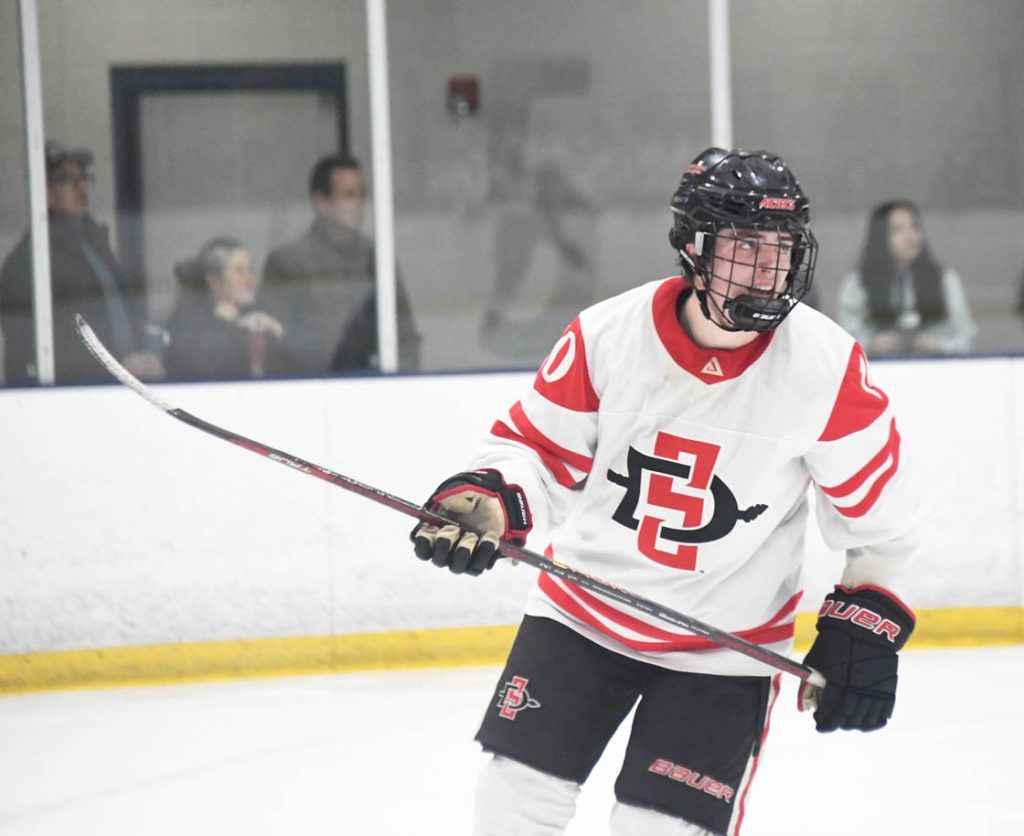
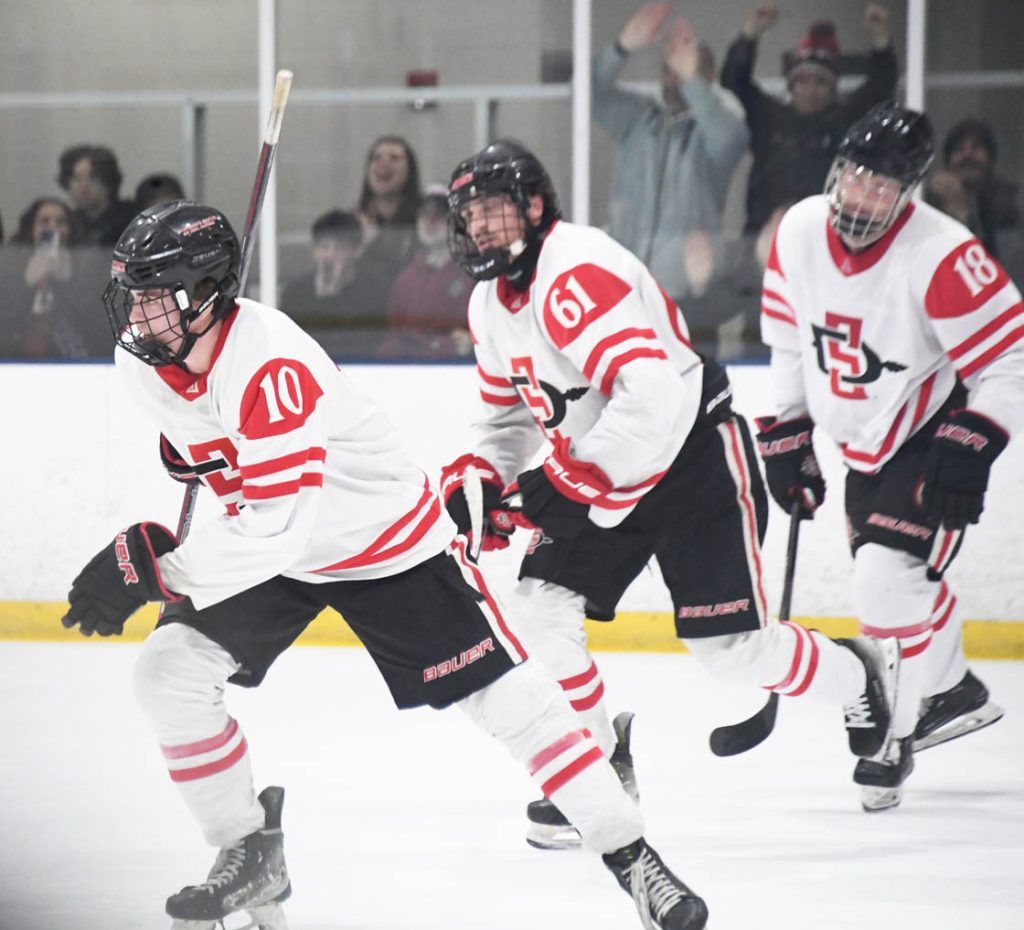
San Diego State University’s men’s ice hockey team faces off the 2026-27 season with a pair of home games against Arizona State University Sept. 4-5 at the Kroc Center Ice Arena. Both games are slated for 6 p.m. starts.
The Aztecs ended the 2025-26 season with 16 juniors on their roster, meaning a lot of familiar faces are eligible to return for an upcoming senior season.
Foremost among the juniors were forwards Cameron Ferraz and Mason Brown, who had combined for 48 goals and 56 assists for 104 points over the previous three seasons. Ferraaz has led the team in scoring in each of his three seasons at Montezuma Mesa.
A slew of new faces are also set to emerge from tryouts held in late August.
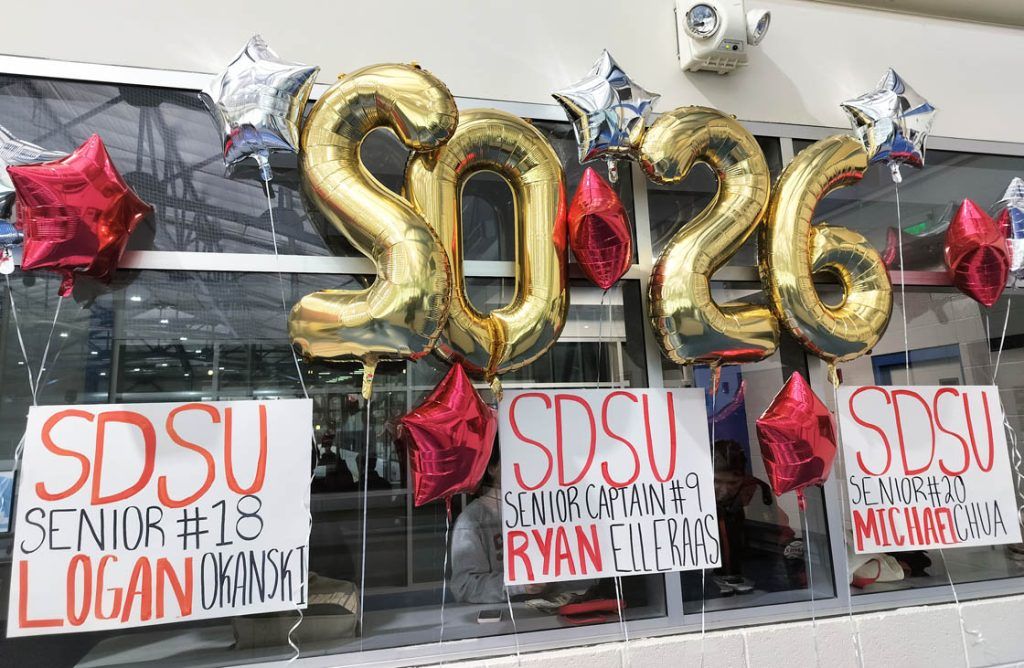
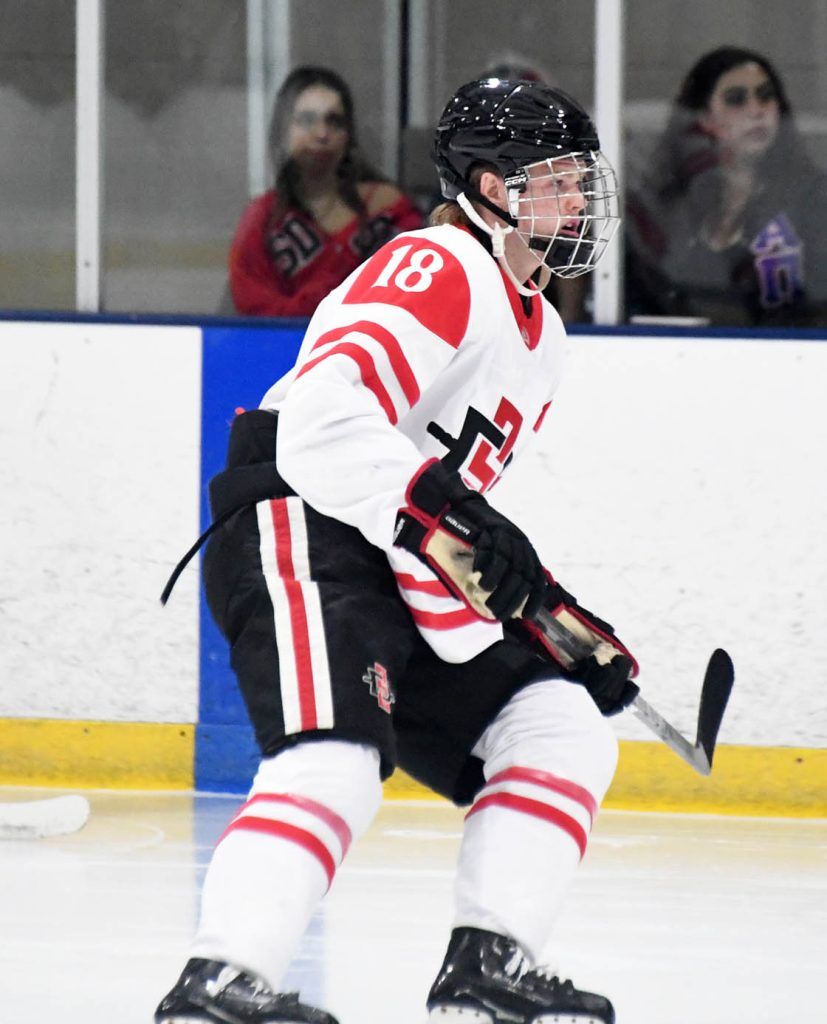
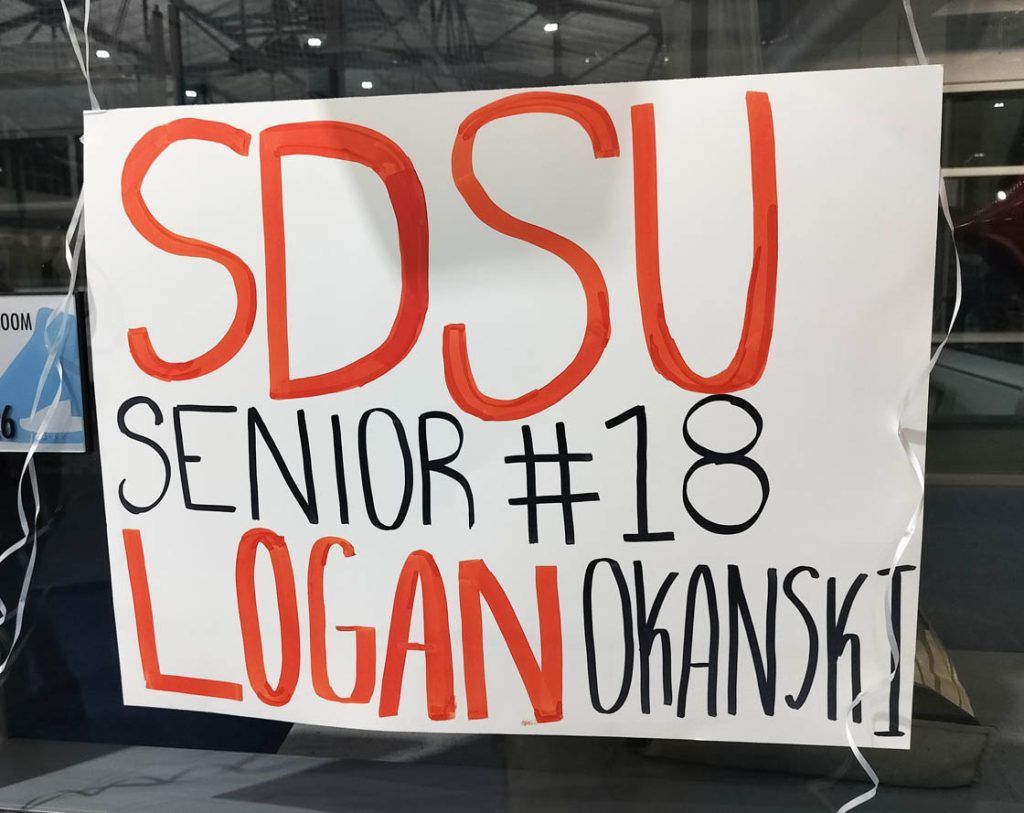
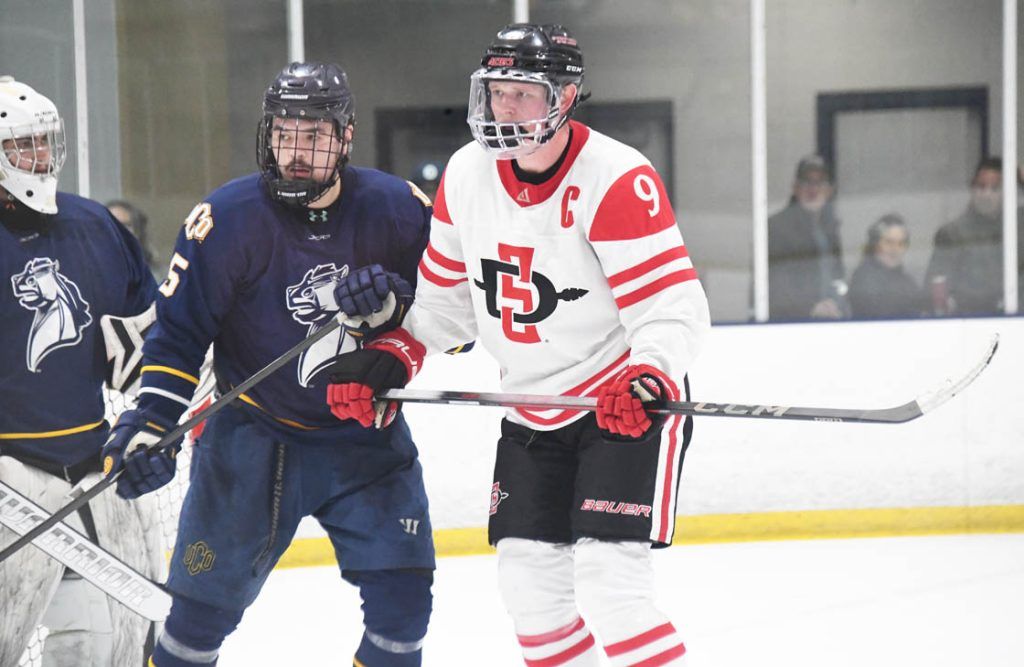
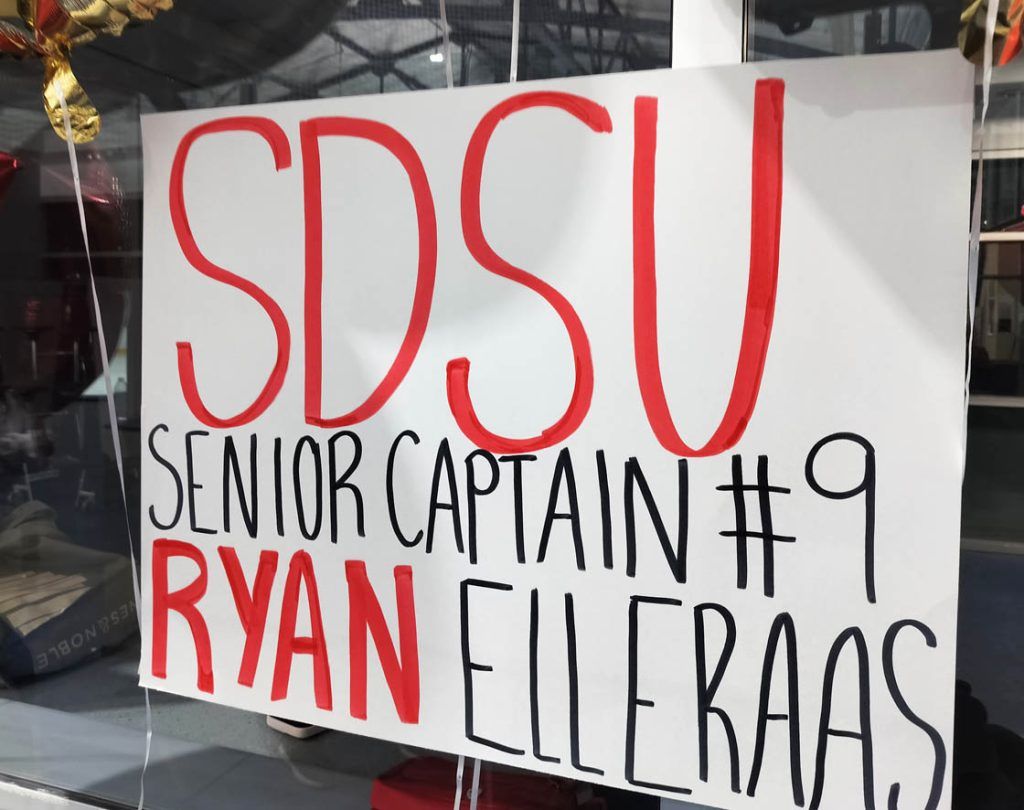
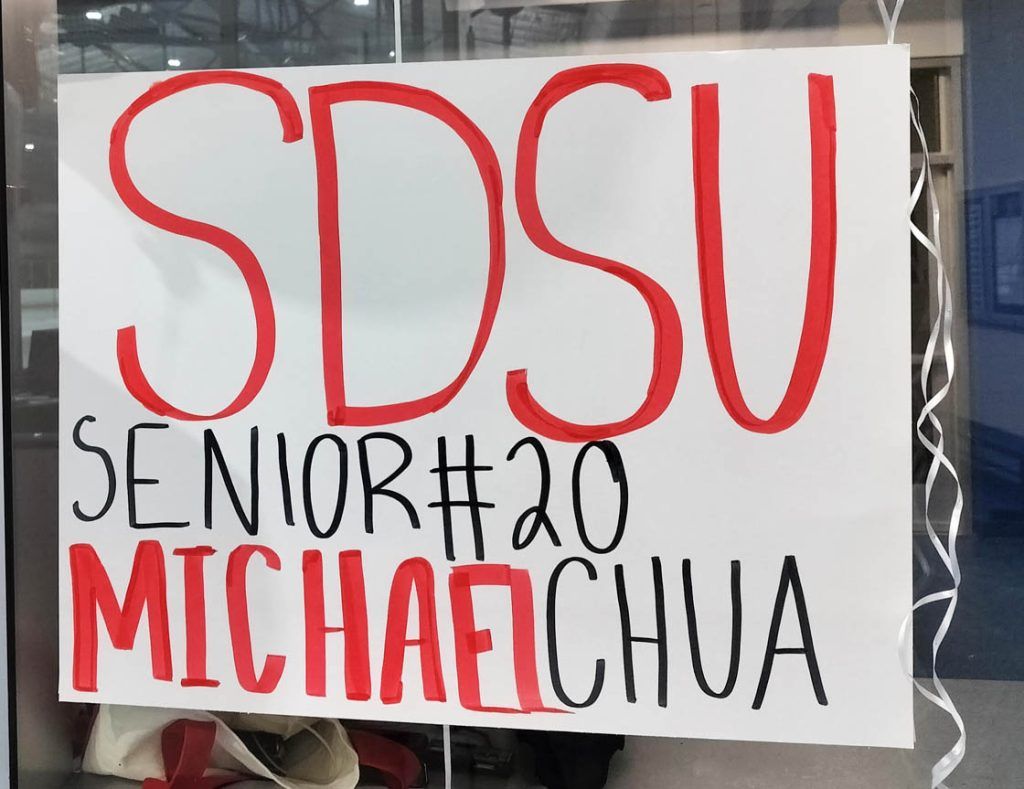
Not everyone is coming back. Logan Okanski, Michael Chua and Ryan Elleraas were among those feted at last season’s Senior Night ceremony.
Elleraas, a team captain, ranked third in team scoring with seven goals and nine assists for 16 points in 25 games while Okanski logged six goals and nine points in 20 games.
Chua appeared in 14 games.
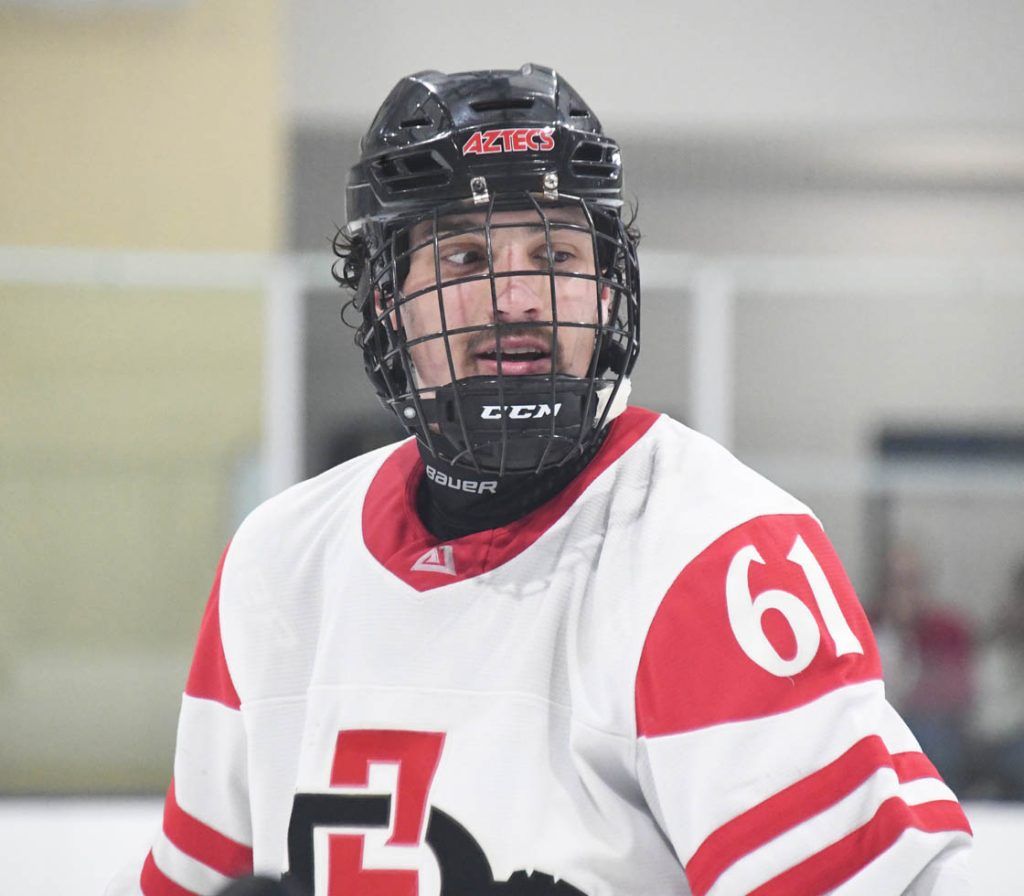
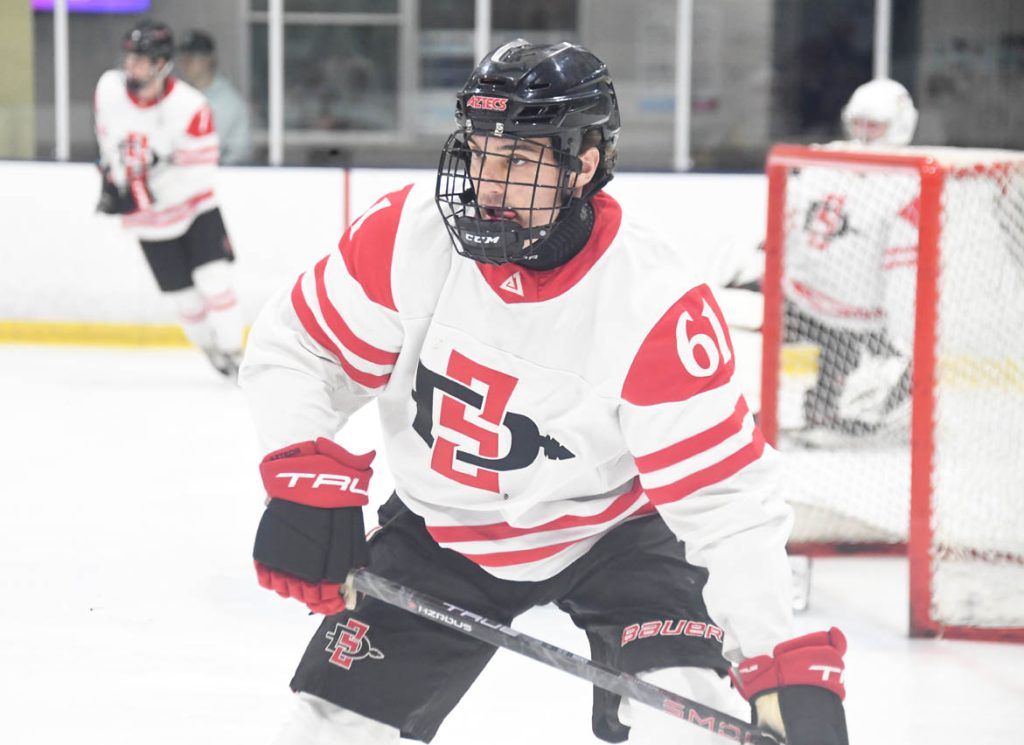
The Aztec program also lost a deep contributor in Marty Mayer, the father of two SDSU players and a longtime SDSU supporter, who died unexpectedly just prior to the end of last season.
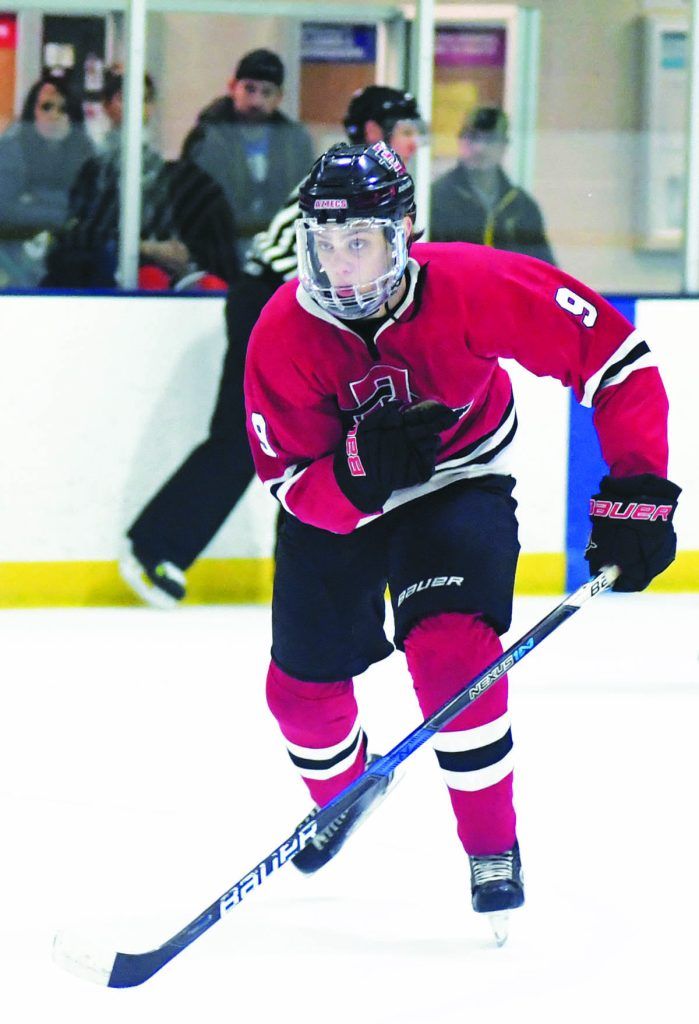
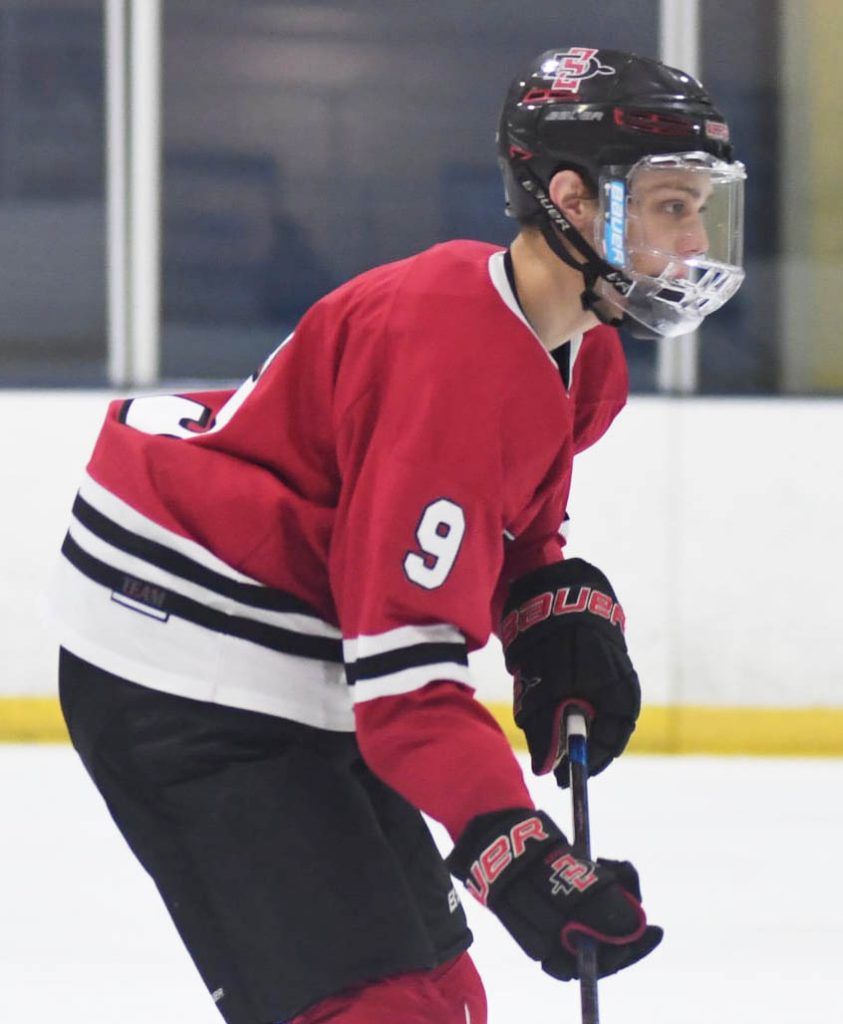
The elder Mayer had supported the SDSU program for more than a decade with two sons from Eastlake High School on the team, Aztec alum Aaron Mayer and younger brother Braden, who had played the last two seasons.
Aaron Mayer, the all-time Metro Conference roller hockey career scoring leader, helped provide the face of the SDSU hockey program across five seasons. He led the Aztecs in scoring during the 2018-19 and 2016-17 seasons after finishing second in 2017-18. He continued to contribute by averaging 1.71 points per game during his last semester with the team to close out the history-making 20-10-0-1 season in 2019-20.
Braden Mayer finished second in team scoring last season with six goals and 12 assists for 18 points in 19 games to wrap up his second season at SDSU. He played a defensive role his first season before moving to forward to bedevil opposing defenses in 2025-26. Braced by a feisty attitude, he earned recognition as one of the top all-around players on last season’s squad.
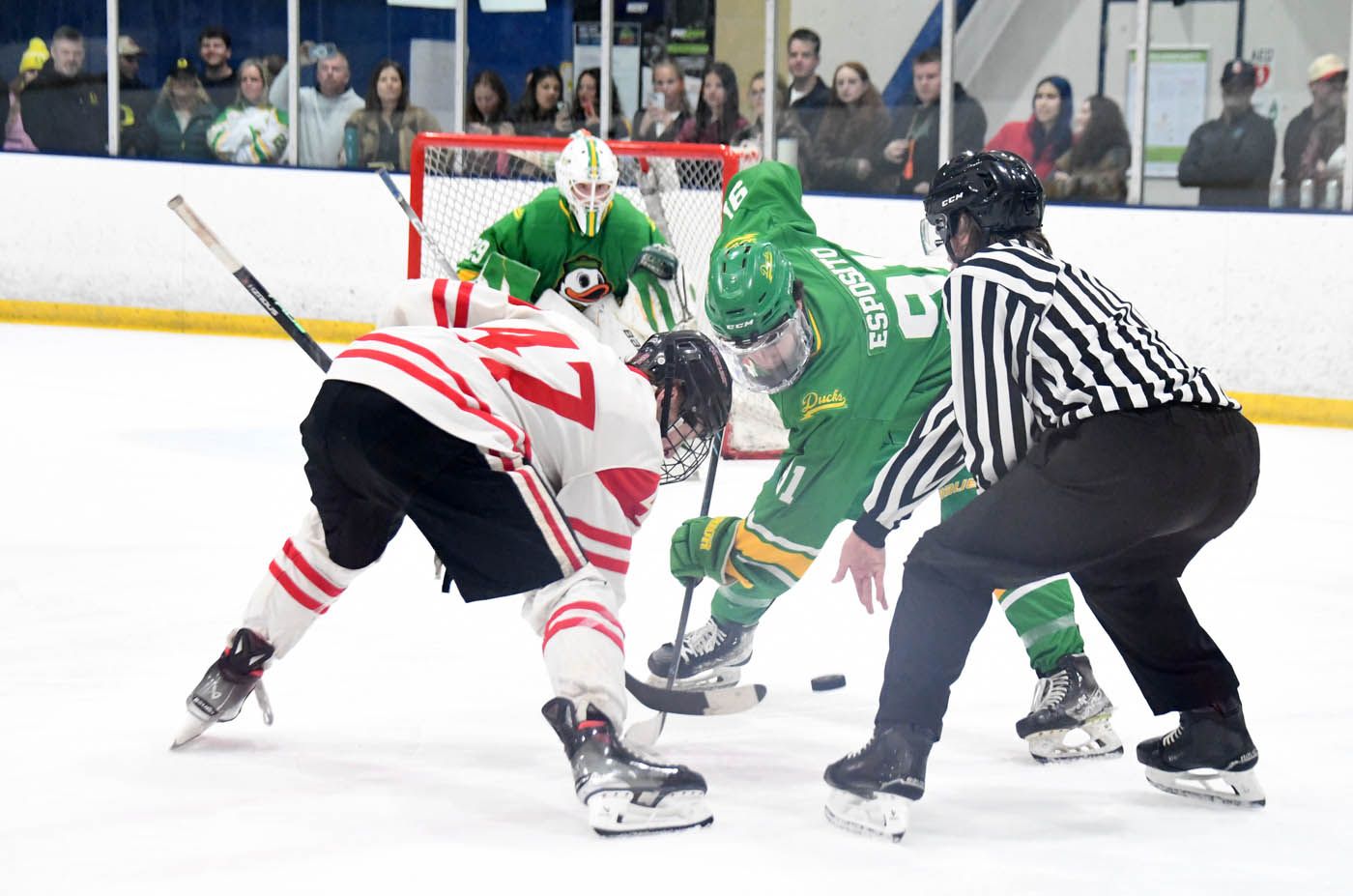
As a tribute to the Mayer family, the Aztecs defeated the visiting Oregon Ducks, 2-1, in the team’s final home game at the Kroc Center on Feb. 21 to record their first win of the season against a fellow Division I ACHA team amid another challenging season.
SDSU finished the 2025-26 season with final 4-22-1 record, 1-19 against Division I opponents.
The win over the Ducks was huge in many different ways.
“In the locker room after the game, it was just like the boys had won the Stanley Cup,” SDSU head coach Dean Wilson recalled. “It was amazing. I’m hoping that resonates enough with the boys to get them excited to work hard this year.”
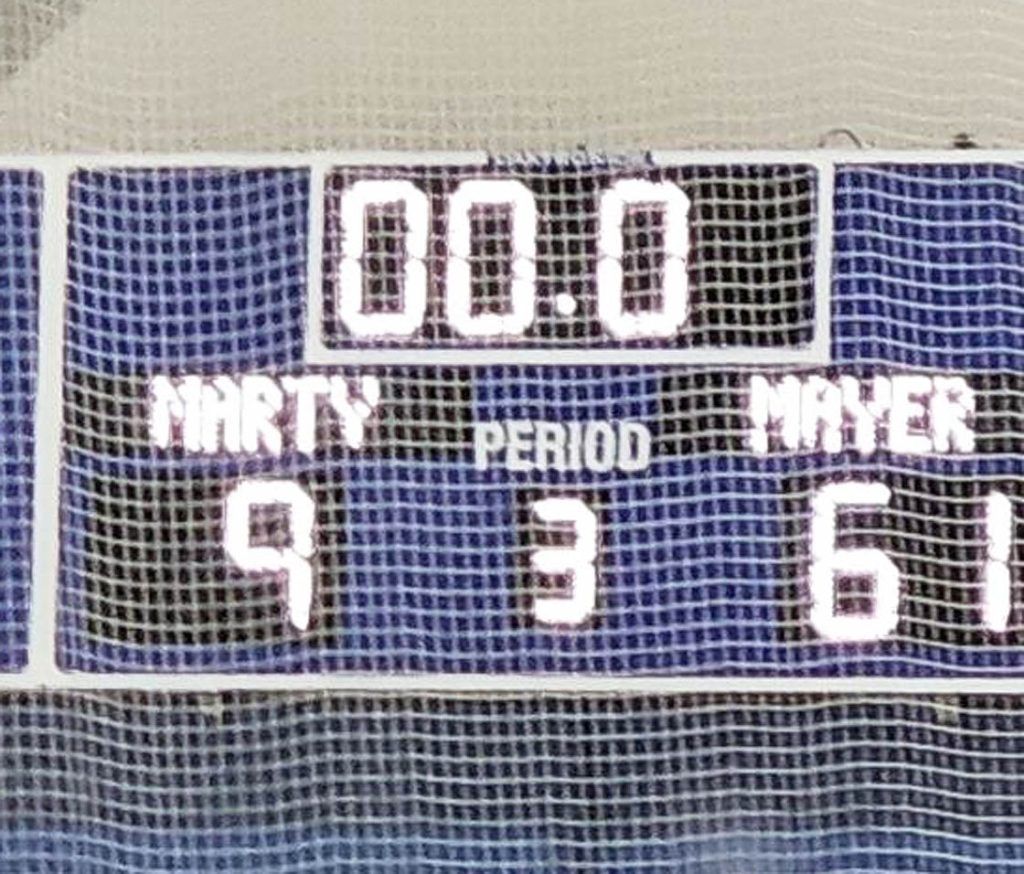
After the conclusion of the game, scoreboard operator Dave Rambo put the Nos. 9 (Aaron Mayer) and 61 (Braden Mayer) on the scoreboard alongside Marty’s name in place of the final score.
A moment of silence took place before the first game against Oregon on Feb. 20, a 4-0 victory by the Ducks.
“Marty was an avid supporter of Aztec hockey and his generosity helped grow our program and allowed our Aztec families to watch and support the team from home,” a statement from the team was read aloud. “Marty is remembered by his daughter Perscilla, son and Aztec alum Aaron and current Aztec Braden. Please join us in a moment of silence to honor Marty as a father, a friend and a member of our Aztec hockey family.”
Okanski and Brown each scored goals in the season-ending win over Oregon while Brown, Ferraz, Zachary Casinghino and Patrick Fast each collected an assist to make a winner out if goaltender Liam Dee.
Marty ball
SDSU assistant coach Jason Galea knew Marty Mayer very well from his association not only with the Aztecs program but also through the San Diego Angels and Saints youth hockey programs and the Hawks high school hockey program.
“In a rare, but truly exceptional manner, Marty was parent who was able to support two sons to participate within the program,” Galea said. “Added to this, both of his children were true ‘standouts’ and exceptional talents on the ice. Both also helped leadership positions within the team. Added to this, Marty Mayer could be found video recording every San Diego State University hockey game that he was able to physically attend. There was no limit to his ability to support his children and the team as a whole.
“Marty helped acquire sponsors and donations to help all the players on the team each and every season. Many of these forms of support and assistance would go without any form of recognition – but would be felt by everyone within the team in some shape or form. For some within the team, Marty Mayer was more than the father of two exceptional players and avid supporter.
“For some, any who were in need, he was a second father and care-giver. For some of the players, Marty Mayer will be remembered as one other ‘first ever’ hockey coaches. He was also the person who helped them/their families afford to play the game of hockey … whether it was creating a silent fundraiser to help kids/families afford the cost of playing, attaining equipment, or simply organizing rides to and from games and tournaments – Marty was always the ‘tip of the spear’ in making things happen. In doing such, never did he want to be recognized or acknowledged for his efforts. He simply wanted to see ‘the kids play.’
“Thus, for many of the players within the two generations of SDSU men’s hockey he supported – Marty Mayer’s presence was simply normal and ‘as it should be’ … because for those lucky/fortunate players … Marty has always been there for them …
“As is said of many people who pass away … ‘Words cannot describe what this person has meant to so many …’ This is just a simply way to describe the manner upon which Marty Mayer has affected so many within his life!”
Next up
The Aztecs are playing an independent schedule once again after two seasons as a member of the Western Collegiate Hockey League, recognized as ACHA’s top flight circuit. The local ice men still have several WCHL teams on their 2026-27 schedule as non-conference opponents, including ASU, UNLV, Arizona and Central Oklahoma.
But the return to independent status frees us the team’s schedule for more competitive games.
SDSU has scheduled nine home games this season at the Kroc Center and 14 road games. The Aztecs will play four games against the University of Alabama (two home and two away) and eight games against Oregon (four home and four away). Loyola Marymount University also will be making a Nov. 14 stop at the Kroc Center.
Home games against Oregon are Oct. 30-31 and Jan. 22-23. Alabama, which is a new opponent, visits Jan. 8-9. The Aztecs take wing to Alabama Sept. 17-18 and the Ducks Dec. 4-5 and Feb. 19-20.
SDSU will be making seven road trips this season: ASU (Sept. 11-12), UNLV (Oct. 9-10), Arizona (Jan. 28-29) and Central Oklahoma (Feb. 5-6) besides home-and-home series against Oregon and Alabama.
UNLV and Arizona both represented the WCHL in last year’s national championship tournament along with Grand Canyon University, Missouri State and Utah.
UNLV (25-4-1) finished regular season play ranked No. 4 among Division I schools after winning last year’s Division I ACHA men’s national championship title, while Utah (15-9-1) and Grand Canyon (20-8) were ranked 12th and 13th, respectively, and Arizona (13-10-3) and Missouri State (15-8-5) were ranked 15th and 17th.
Missouri State joined UNLV, Utah, GCU and Arizona from the WCHL at the ACHA Division I national championship tournament March 12-26 in St. Louis.
Ohio University (32-6) defeated Adrian College, 3-1, to win last year’s Division I men’s national championship. The Bobcats defeated Arizona, 5-4, in overtime to start their 4-0 run through the bracket. It was the fifth national championship for Ohio.
Utah, GCU, Arizona and Missouri State all won their openin-round games in the 24-team tournament while UNLV advanced all the way tot he semifinals.
UNLV drew GCU in the Round of 16, winning a tight 3-2 decision to advance to the quarterfinals. Adrian College, which finished runner-up in the 2025 Division I national championship game to the Skatin’ Rebels, ended UNLV’s run with a 3-2 win in the semis.
Former SDSU goaltender Garrett Fuller (7-13-1, 4.27 GAA and 0.895 SPCT in 2023-24) appeared in both Utah games with a 1-1 record, 1.51 GAA and outstanding 0.957 save percentage.
Red & Black
Other key juniors from last season included forwards Brandon Grant, Drew Gunderson, Kolby Hennessy, Nicolas Grigoropoulos, Patrick Fast, Noah Robinson and Garrion Barber, forward/defensemen Connor Hennigan and Zachary Stroozas, defensemen Jake Abenojar and Sean Yeo and goaltenders Brody Hsiao, Dee and Nicholas Heinzle.
Robinson chalked up 10 points (two goals, eight assists) in 17 games last season while Abenojar contributed seven points (four goals, three assists) nin 15 games from his defensive position, Grant (two goals, four assists) and Barber (one goal, five assists) both collected six points while Hennessy (three goals, two assists) and Fast (one goal, four assists) each tacked on five points and Hennigan and Grigorpoulos both added four points to the scoring ledger.
Wilson is hoping to get as much out of the three goaltenders as possible as they will all graduate after this season.
Heinzle posted a 3-0 record with a 4.57 goals-against average and 0.934 save percentage last season against non-Division I opponents while Hsiao went 2-7-0-1 with a 6.40 GAA and 0.884 save percentage in 2024-25 when the team finished 5-23-0-1 in its first WCHL season. Dee was 1-9 last season (8.44 GAA, 0.861 SPCT) and 2-13 two seasons ago (6.82 GAA, 0.870 SPCT).
SDSU finished 1-20-1 its first season at the Division I level in 2022-23 and generated more success with an 8-4-1 record its second season as an independent.
Barber, a standout roller hockey player at Poway High School, saw significant playing time as a true freshman last season by appearing in 19 games.
“He played a lot for a freshman,” Wilson noted. “Most freshmen play only a little to get their feet wet but he showed he could be a contributor.”
Wilson will be looking for improvement from several other younger players this season.


